The Greenwich Historical Society is a multi-building campus with history rooted back to the 18th century. Displayed are two distinct time periods; the era of the Bush family during the Revolutionary War and the Holley family during the imppressionist movement of the Cos Cob art colony. Take an overview look at our campus and its history below. Plan your visit and book your tours online!
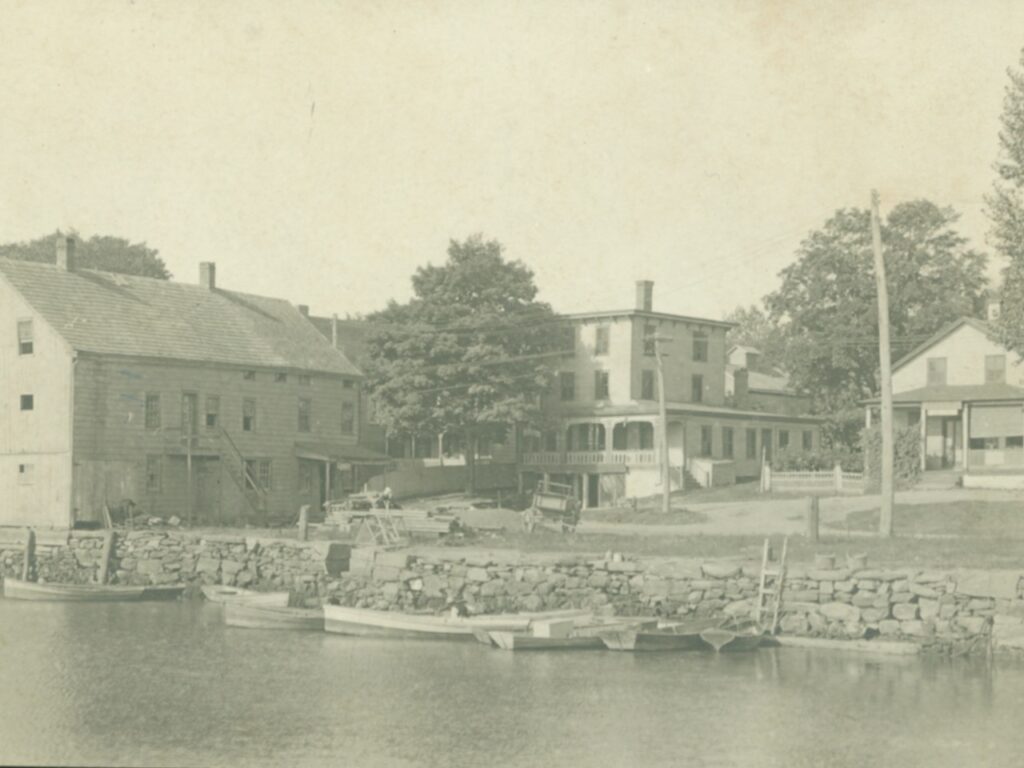
Bush-Holley House looks out over the Mianus River, on a site once known as the Lower Landing. Here in the 18th century, merchant David Bush and his son Justus Luke Bush built and operated a tide mill and several warehouses for their mercantile business. Though the mill and its surrounding buildings no longer stand, Bush–Holley House (1732), Bush Storehouse (1805)—which now houses offices for Historical Society staff —and the nearby Mill Pond are reminders of this once busy waterfront hub.
Historic Buildings
Toby's Tavern
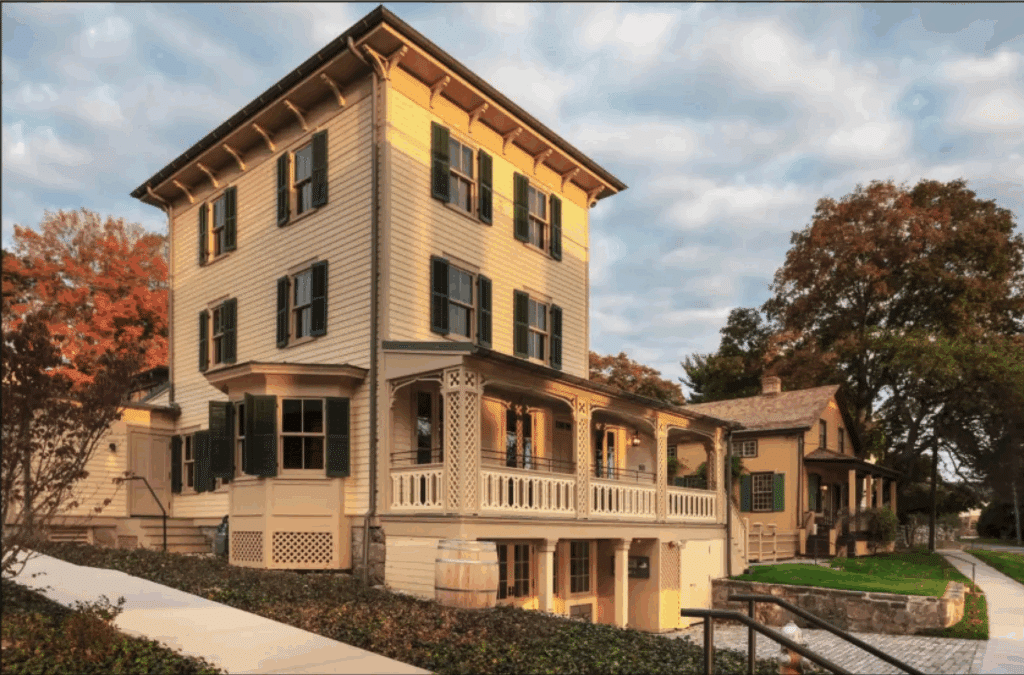
What is now known as our Museum Lobby, Library & Archives, Galleries and Museum Store was home to a three-story railroad hotel. It was restored to its mid-century appearance in 2018. The ground floor was home to a popular tavern run by Tobias Burke, affectionally nicknamed “Toby’s Tavern.” The front facade now hosts archival content and a section of the original wallpaper can be seen on the walls of the Museum.
Mary Munsinger at the well house next to the old Bush Storehouse (then the Cos Cob Post Office), circa 1907
Greenwich Historical Society
Bush Storehouse
The Bush Storehouse was built by Justus Luke Bush circa 1805. In the Art Colony era it served as the Cos Cob Post Office under direction of postmaster Charles Munsinger, and its exterior has been restored inkeeping with its appearance during that time. Today it houses the Greenwich Historical Society Administrative Offices.
Bush-Holley House
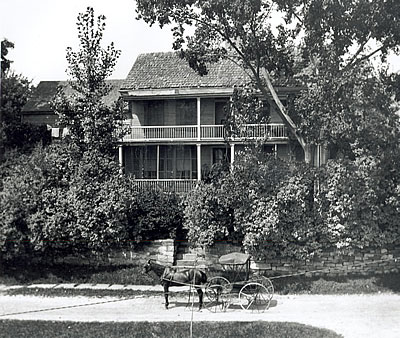
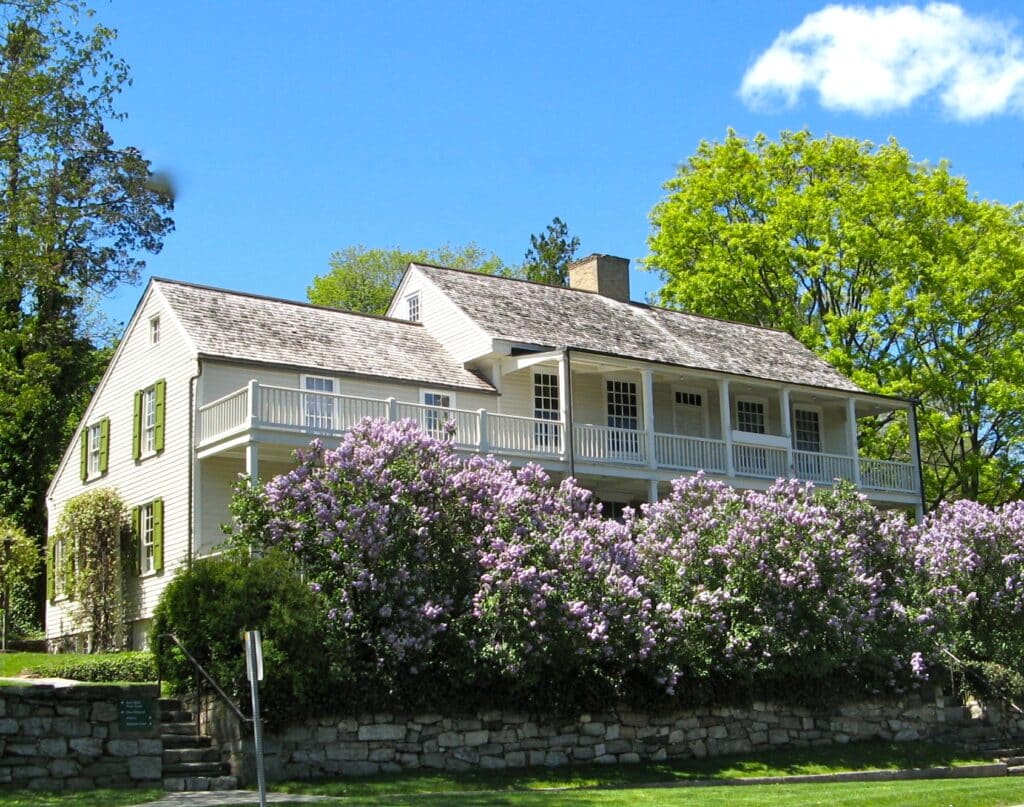
The Greenwich Historical Society purchased the house in 1957 from the widow Constant Holley MacRae and first opened it as a museum in 1958. Bush-Holley House was designated a National Historic Landmark in 1991 by the National Park Service. In 2005, the historical society was accredited by the American Alliance of Museums. Tour the house to learn more about the long-standing history.
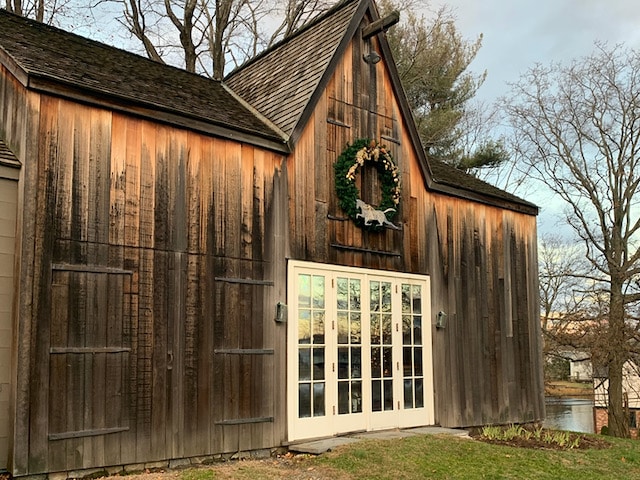
Our restored mid-19th century barn serves as an education center for lectures and programs for school children, families and the greater Greenwich community throughout the year. During the era of the Cos Cob art colony, the Holley family used the barn to display and host art shows with the local community.
Historic Gardens
Tavern Garden
This charming cottage garden in the colonial revival style is anchored by oak-leaf and smooth hydrangea and interspersed with daffodils, iris, tulips and lilies. Turn of the century photographs of Cos Cob postmaster Charles Munsinger and his wife Mary, who lived and operated the post office in the former Bush Storehouse, were consulted to determined the former appearance of this small garden, including the presence of climbing roses and Dutchman’s pipe growing over the doorway and up the walls of the former Storehouse.
American Impressionist Garden
This exhuberant and informally arranged flower garden is filled with perennials and self-sown annuals of the type favored by home gardeners like Constant Holey MacRae in the era of the Cos Cob Art Colony. Holleyhocks, foxglove, roses, peonies, poppies and catmint erupt in riotous color, attracting bees and other pollinators, and would have provided material for Constants’ prize-winning floral arrangements.
Heirloom Vegetable Garden
1. Flint Corn
2. Cranberry Pole Beans
3. Pattypan/Scallop Squash
4. Abenaki Corn
5. Crookneck Squash
6. Sugar Pumpkin Squash
7. Globe Artichokes
8. Marrowfat Peas
9. Red Cabbage
10. Wethersfield Onions (2 Rows)
11. Currants
12. Kale
13. Dutch Onions (2 Rows)
14. Carrots (2 Rows)
15. Silesia Lettuce
16. Dutch Brown Lettuce
17. Collards
18. Red Leaf Lettuce
19. Cucumbers
20. Nasturtium
21. Watermelon
22. Mary Washington Asparagus
23. Alpine Strawberries (2 Rows)
24. Bullnose Peppers
25. Soft Neck Garlic (2 Rows)
26. Johnny Jump-Ups
27. Sunchoke
28. Good King Henry
29. Corn Salad
30. Sorrel
31. Lamb’s Ear
32. Lavender
33. Sweet Annie
34. Rosemary
35. Rue
36. Yarrow
37. Borage
38. Oregano
39. Feverfew
40. Bee Balm
41. Mint
42. Marjoram
43. Parsley
44. Thyme
45. Lemon Balm
46. Sage
47. Chives
Both the Bush and Holley families kept large gardens, while living in Cos Cob. The Bush family, who resided in the house throughout the 18th century and the early 19th century had a garden primarily grown and maintained by the enslaved members of the household. In the early 1900’s, Edward Holley and his son-in-law, the artist Elmer Livingston MacRae, kept gardening journals, detailing what they planted and harvested each year.
In honor of America’s 250th, this year’s heirloom vegetable garden consists of plants common in the 18th century. One of the beds is the “three Sisters,” a growing method used primarily by Native Americans, in which corn, beans and squash are planted together. Additionally, several of the beds are recreations of typical 18th century gardens, and consist of plants with culinary and medicinal uses. Among these garden beds is one based on Bush family recipes, and what was grown in their gardens.
Witness Stone Garden
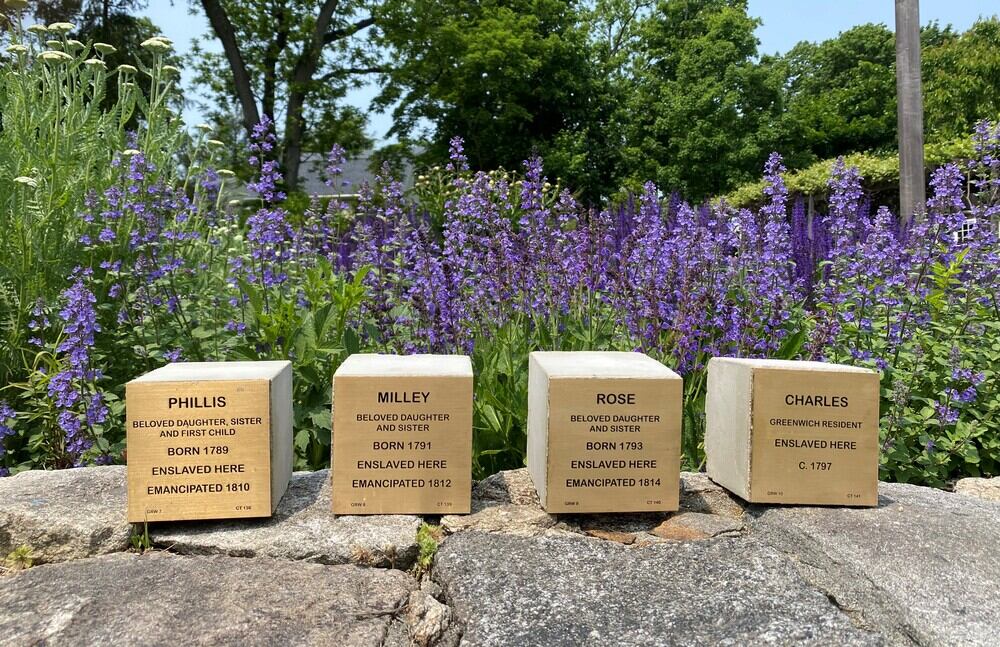
The newest garden at the Greenwich Historical Society, this commemorative plot is planted to honor the lives of enslaved people who lived and labored on this site. Each year a pair of bronze commemorative stones bearing the names of these individuals will be installed in the garden, part of our partnership with the Witness Stones Project, an initiative connecting schools with museums to assist students in researching the history of the enslaved who lived in their community.
Book your tour today!
Visit our campus and book your tour of the Bush-Holley House today! View the galleries and shop the Museum Store. For more information on tour times and pricing click below.
Thank you to our Green Team volunteers and the Green Fingers Garden Club for their generous support of the Bush-Holley House heirloom vegetable garden. For information on how to volunteer for the Green Team, please contact Facilities Manager Rich Cooke at rcooke@greenwichhistory.org